
The reusable packaging advantage: stronger national supply chains, stronger provinces
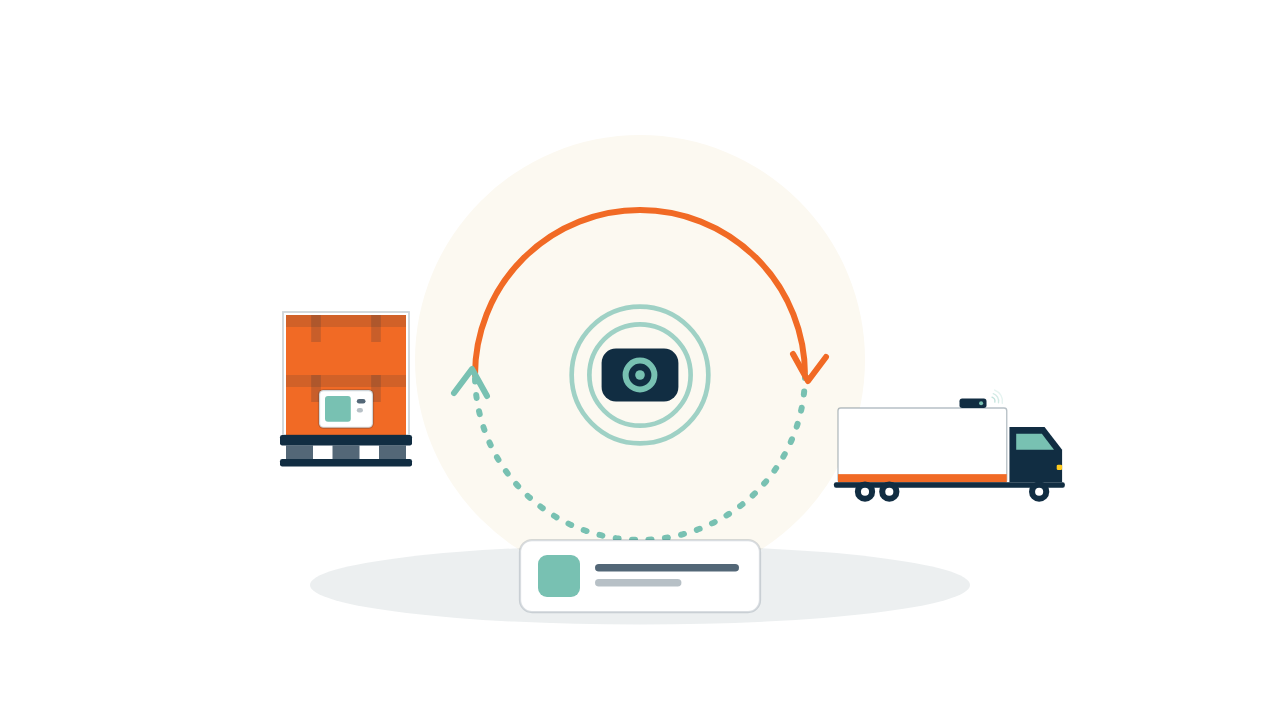
Canada is entering a period where supply chain precision matters more than ever. International trade is shifting. Tariffs are reshaping cost structures. Cross‑border flows are finding a new balance. At the same time, interprovincial trade is rising, and domestic supply chains are carrying more of the load.
In this environment, the quality of execution inside Canada has a direct impact on provincial economies and corporate margins. RTP and pallet‑bin visibility strengthen that execution.
Closed‑loop operations, whether in manufacturing, healthcare distribution, or large‑format retail depend on reusable transport packaging that cyclically moves through the same facilities. When those racks, bins, and pallets become visible in real time, the entire loop becomes more predictable, more efficient, and more resilient.
High‑volume manufacturing: precision at the rack level
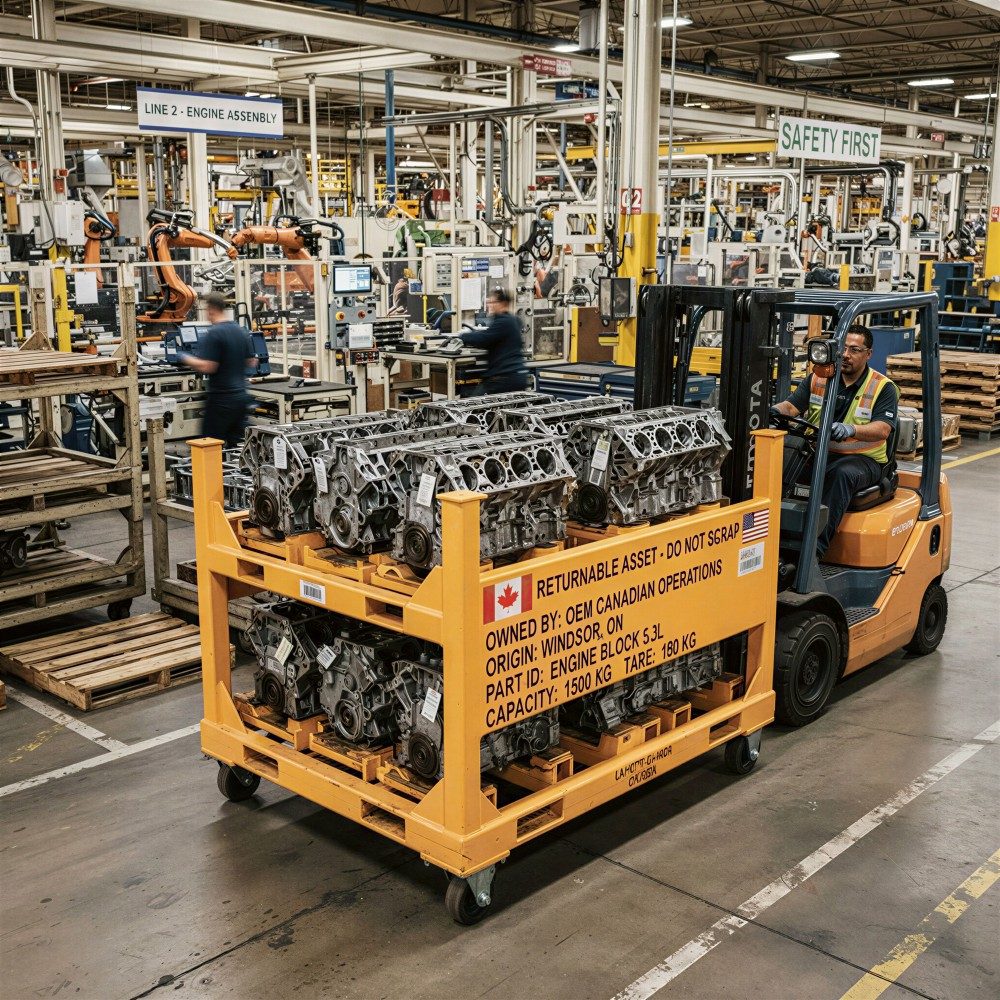
Automotive, aerospace, agricultural equipment, and industrial manufacturing rely on time‑sensitive components that move through Tier‑2 suppliers, trailers, receiving docks, staging areas, and assembly lines. A single missing rack can disrupt a shift. A delayed subassembly can halt production.
RTP visibility gives manufacturers clarity on every rack in motion. It shows where the rack is, how long it has been in staging, and when it becomes empty and ready for return. It reduces manual searches, eliminates blind spots, and supports near‑JIT production with confidence.
For provincial manufacturing clusters, Ontario’s automotive corridor, Quebec’s aerospace ecosystem, Western Canada’s machinery sector, this clarity strengthens throughput and reduces waste. It supports provincial GDP by improving production velocity and lowering operational friction.
Healthcare distribution: reliability for critical goods
Hospitals, clinics, and diagnostic centers depend on predictable deliveries of medical supplies, pharmaceuticals, and temperature‑sensitive goods. Closed‑loop RTP systems are common in healthcare distribution, but they often operate without real‑time visibility.
When bins and pallets report their own location and condition, healthcare distributors gain:
- fewer exceptions
- stronger chain of custody
- faster reconciliation
- reduced time spent chasing updates
This supports provincial health systems that cannot afford uncertainty or delays.
Big retail: smarter movement across Canada
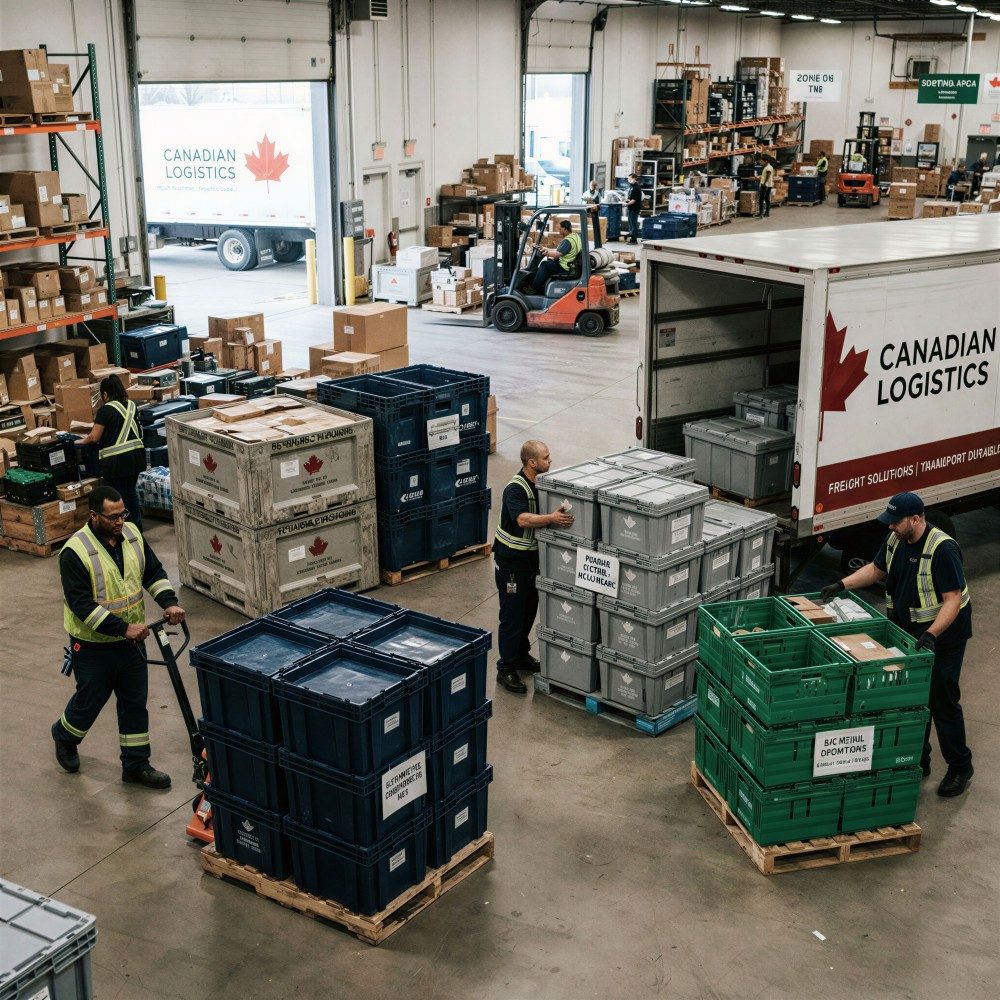
Large Canadian retailers operate massive closed‑loop networks between distribution centers and stores. RTP assets such as reusable pallets, bins, and cages circulate continuously.
Visibility at the pallet‑bin level improves:
- on‑time performance
- inventory accuracy
- loss prevention
- temperature compliance for perishables
- dispute reduction between DCs and stores
It creates a calmer, more predictable flow of goods across provinces and strengthens domestic logistics at a time when Canada needs resilient internal supply chains.
A national economic advantage
Across provinces, RTP and pallet‑bin visibility reduce loss, reduce disputes, and improve on‑time performance. They support interprovincial trade by creating a more predictable flow of goods between regions.
Cross‑border trade will remain a core part of Canada’s economic engine, but with margins under pressure, precision in execution matters. Visibility helps companies protect those margins. It helps carriers and shippers coordinate better. It helps insurers understand risk. It helps every party arrive at a more balanced, mutually beneficial relationship.
Canada is entering a phase where clarity is a competitive advantage. RTP and pallet‑bin visibility deliver that clarity at the level where it matters: the reusable asset beneath the freight.
As provinces invest in smarter mobility and smarter logistics, visibility‑enabled RTP is a fast, low‑friction way to modernize closed‑loop operations in manufacturing, healthcare, and retail. It strengthens provincial economies, supports national supply chains, and improves cross‑border performance.
DigiBiz is ready to help Canadian enterprises bring this capability into their fleets, distribution centers, and manufacturing networks, contributing to building a more precise, more resilient, and more competitive Canada.
More articles
all resources
RTP visibility across manufacturing, retail, grocery, and healthcare - closing the loop
read article
The side-effect that becomes the main value
read article
Precision logistics: saving margins in Canada's inter-provincial trade amidst US trade challenges
read article
The next layer of road transportation starts with seeing every pallet
read article
Why visibility is the clear choice for supply chain experts
read article