
The side-effect that becomes the main value

Reusable Transport Packaging (RTP) has always had a simple purpose: get racks, bins, totes, and containers back where they came from. Efficient return, lower waste, predictable cycles.
But something interesting happens when you connect those RTP assets with BLE tags and real‑time visibility.
A side‑effect emerges, and it quickly becomes more valuable than the original purpose.
Once racks, bins, and subassemblies start reporting their location, movement, and zone transitions across a multi‑tier supply network, RTP visibility stops being about packaging efficiency.
It becomes real‑time clarity into the entire supply network feeding the line, the store, or the hospital.
And that is a major shift in supply and distribution reality.
The manufacturing example: from the bonus to the main value
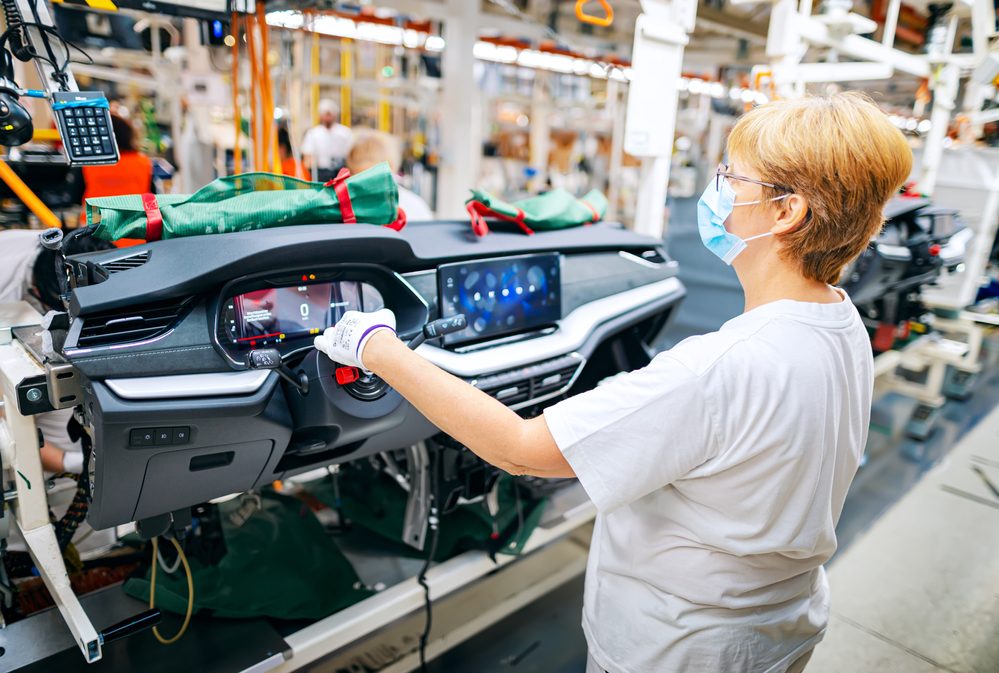
Consider a Tier‑1 automotive manufacturer running a fast‑paced, sequenced assembly line.
Every critical Tier‑2 supplier is connected at rack level. Each returnable rack carries a BLE tag. Gateways sit at supplier docks, inside carriers’ trailers, and at the plant’s receiving and staging zones.
A handful of Tier‑3 suppliers are connected deeper - at subassembly level. A single Tier‑4 supplier of a no‑second‑source part is tracked at package level.
The result is a continuous chain of custody from raw component to line side.
And the “side‑effect” becomes the real value:
RTP visibility starts as packaging efficiency. It becomes the operational heartbeat of high‑volume manufacturing.
Retail, grocery distribution & agriculture: closed‑loop flow at scale

Reusable pallet‑bins, RPCs, and totes circulate continuously between Distribution Centers (DCs) and stores.
With BLE‑enabled RTP visibility:
- A pallet‑bin loaded at the DC becomes visible the moment the tag activates
- Gateways inside trailers capture movement, temperature, and zone transitions
- Store receiving docks confirm arrival automatically
- Backroom zones can be equipped to track dwell time and compliance
- Empty bins staged for return become visible again on the backhaul
- Arrival “home” at the DC closes the loop.
The retailer now sees:
- Which stores return bins promptly
- Which lanes have slow cycle times
- Which assets are at risk of loss
- Which temperature‑sensitive goods need attention
The “side‑effect” here brings an operational intelligence: RTP assets become sensors for the entire DC‑to‑store‑to‑DC ecosystem.
Healthcare distribution: chain of custody meets patient safety

Healthcare distribution depends on reliability, compliance, and traceability. Reusable bins and pallets move medical consumables, diagnostics, and cold‑chain products across hospitals, clinics, and pharmacies.
With BLE‑enabled RTP visibility:
- A bin becomes visible the moment it’s loaded at the distributor
- Gateways track movement to the hospital receiving dock
- Zone transitions inside the hospital confirm custody and environmental conditions
- Empty bins staged for return are detected automatically
- Arrival “home” at the distributor closes the loop and generates a digital record.
The distributor gains:
- Proof of delivery
- Proof of return
- Temperature compliance history
- Measured cycle time for replenishment
- Full digital chain of custody
The “side‑effect” becomes a continuous audit trail, something healthcare systems desperately need but rarely have.
Why RTP visibility matters now
Across manufacturing, retail, grocery, agriculture, and healthcare, RTP visibility delivers the same set of benefits:
- Early detection of upstream delays
- Real‑time visibility into multi‑tier supply flow
- Measured cycle times for every asset
- Predictable replenishment
- Fewer shortages, fewer surprises
- Stronger coordination across tiers
- A live sensor network built from assets you already own
RTP visibility begins as a way to return packaging efficiently. But once connected, it becomes something far more powerful:
A real‑time nervous system for the entire supply network.
And in high‑volume, high‑stakes industries, that side‑effect is exactly what keeps operations stable, customers satisfied, and teams ahead of the next disruption.
More articles
all resources
RTP visibility across manufacturing, retail, grocery, and healthcare - closing the loop
read article
The reusable packaging advantage: stronger national supply chains, stronger provinces
read article
Precision logistics: saving margins in Canada's inter-provincial trade amidst US trade challenges
read article
The next layer of road transportation starts with seeing every pallet
read article
Why visibility is the clear choice for supply chain experts
read article