
RTP visibility across manufacturing, retail, grocery, and healthcare - closing the loop
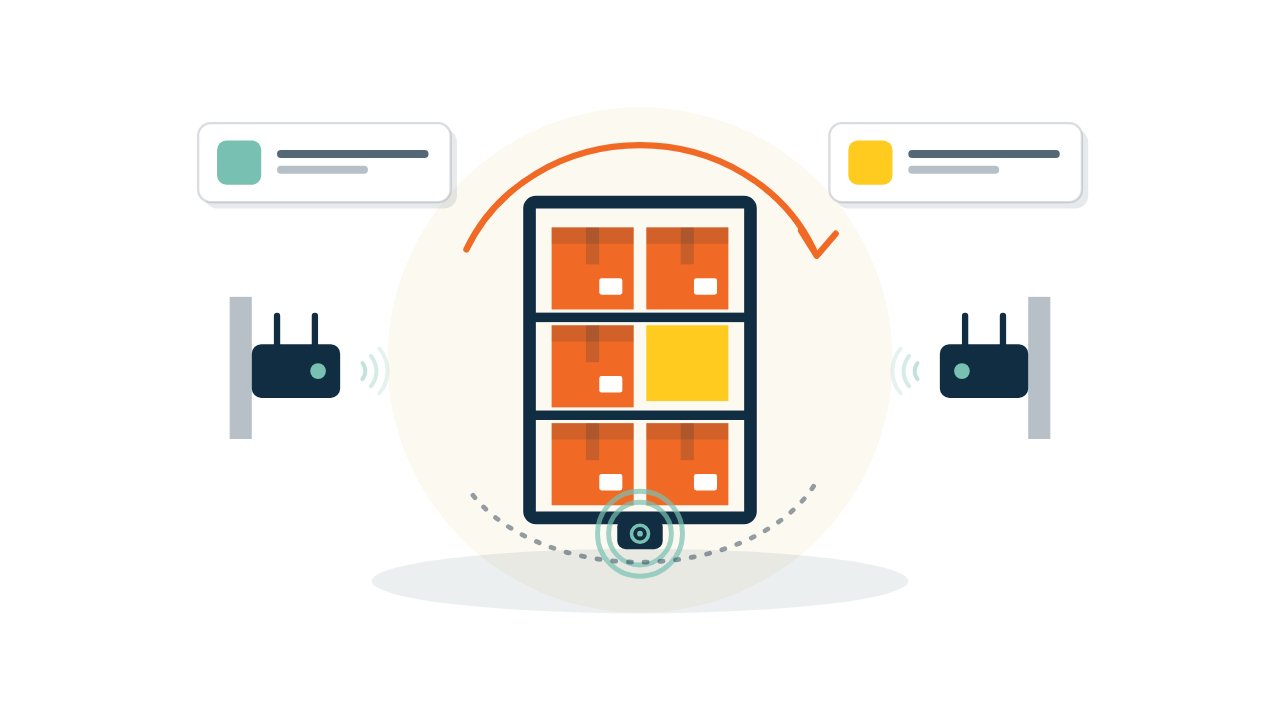
Reusable Transport Packaging (RTP) has been part of industrial logistics for decades. Racks, bins, totes, pallet‑bins, RPCs, and reusable pallets quietly move millions of components, groceries, pharmaceuticals, and retail goods every day. Yet until recently, these assets traveled blind: no real-time visibility, no chain of custody, no cycle-time intelligence, and no early warning when something went wrong.
Today, BLE PALs, ULP BLE tags, and printed active labels change that reality. They turn every RTP asset into a live data point - a sensor that reports movement, location, temperature, and custody across multi‑tier supply networks.
The starting point: a visibility gap everyone feels
Across industries, the symptoms are the same:
- Production teams searching for missing racks or WIP orders
- Grocery carriers discovering temperature excursions only at delivery
- Retail DCs losing track of pallet‑bins across stores
- Healthcare distributors relying on manual scans for GDP compliance
- Dispatchers guessing cycle times instead of measuring them
- Supply chain managers reacting to shortages instead of preventing them
As one manufacturing customer puts it:
“Work-in-progress (WIP) status is unavailable without manual inquiry, leading to uncertainty in production tracking and scheduling.”
This is the baseline from which every RTP project begins.
The project kickoff: mapping the closed loop
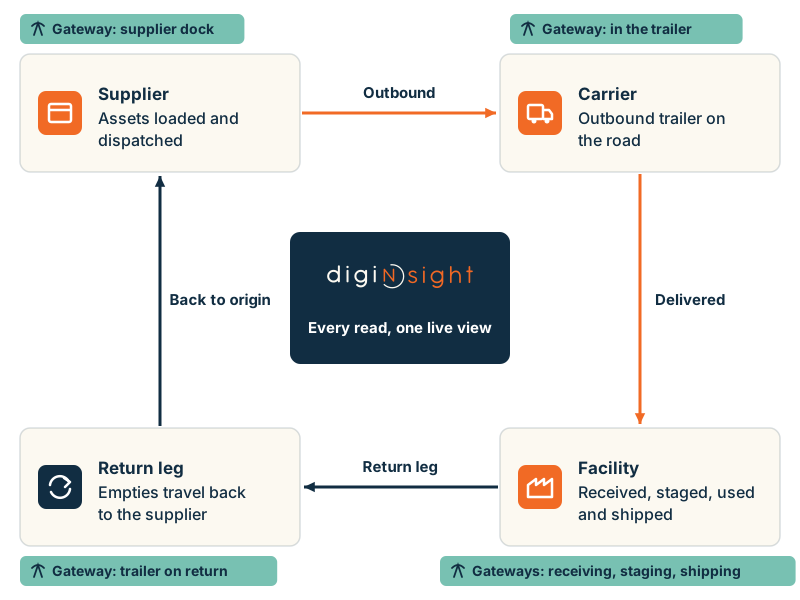
A typical RTP project starts with a discovery phase:
The goal is simple: create a continuous chain of custody.
In manufacturing, this means tagging every Tier‑2 rack and placing gateways at supplier docks, inside trailers, and at the plant’s receiving, staging and shipping zones. In grocery, it means tagging pallet‑bins and RPCs and equipping trailers with gateways. In healthcare, it means tagging reusable bins and pallets and enabling temperature tracking across the cold chain.
Deployment: turning RTP assets into live sensors
Once tags are applied, the loop becomes digital.
Manufacturing example
A rack leaves a Tier‑2 supplier’s dock. The BLE PAL activates and begins reporting movement. Gateways detect arrival at the Tier‑1 receiving dock, then every transition through staging, line‑side storage, and assembly feed zones.
“Every stakeholder from production floor to supply chain to return logistics can access the exact status and location of any asset/batch at any time.”
Empty racks return with measured cycle time instead of assumptions.
Grocery & food distribution example
A pallet‑bin loaded with produce leaves the DC. A trailer gateway captures temperature and location. If temperature spikes:
“Commodity Manager… receives an alert that temperature in the trailer has exceeded the specified top limit. Carrier's dispatcher and driver notified immediately. Action taken.”
The issue is resolved before spoilage — preventing a $200K loss.
Healthcare example
A biologic shipment tagged with a PAL reports a temperature excursion mid‑route.
“The driver was notified immediately and identified a malfunctioning cooling unit; she transferred the shipment to a compliant vehicle within 23 minutes.”
GDP compliance is automated.
The data layer: where the real value emerges
Once RTP visibility is live, the organization gains:
- Measured cycle times for every rack, bin, or pallet
- Early detection of upstream delays
- Real-time temperature assurance
- Digital chain-of-custody logs
- Automated compliance workflows
- Predictable replenishment
- Reduced loss, shrink, and misplacement
- Fewer shortages and fewer rejected shipments
This is the moment when every RTP project becomes more than packaging efficiency. It becomes supply‑network clarity.
Why RTP projects are so beneficial
- Fewer lost racks and bins
- Faster dock operations
- Predictable return cycles
- Better coordination with Tier‑1 customers
- Real-time trailer visibility
- Temperature compliance
- Fewer disputes
- Automated proof of delivery
- Early warning on shortages
- Accurate WIP tracking
- Reduced manual searching
- Optimized replenishment
- End-to-end visibility
- Automated alerts
- Measured performance
- Stronger SLA compliance
- Fewer WISMO calls
- Fewer surprises
- Better route planning
- Automated GDP, FSMA, HACCP, CFIA reports
- Digital audit readiness
- Zero manual scanning
Industries which benefit the most
RTP visibility is an economic advantage
BLE PALs and ULP BLE tags unlock a new level of visibility across supply networks. They reduce waste, prevent spoilage, eliminate shortages, and strengthen compliance. They help suppliers, carriers, manufacturers, retailers, and healthcare operators execute with clarity instead of guesswork.
And at scale, RTP visibility becomes a contributor to provincial, national, and cross‑border economic efficiency.
Embrace it. Benefit from it. Become an RTP‑empowered winner.
More articles
all resources
The side-effect that becomes the main value
read article
The reusable packaging advantage: stronger national supply chains, stronger provinces
read article
Precision logistics: saving margins in Canada's inter-provincial trade amidst US trade challenges
read article
The next layer of road transportation starts with seeing every pallet
read article
Why visibility is the clear choice for supply chain experts
read article